AI Search Visibility · AI Relations · AI Trust · GEO · Brand Management · Reputation Management · Compliance · Content Strategy
AI Narrative Intelligence: Correcting Brand Hallucinations
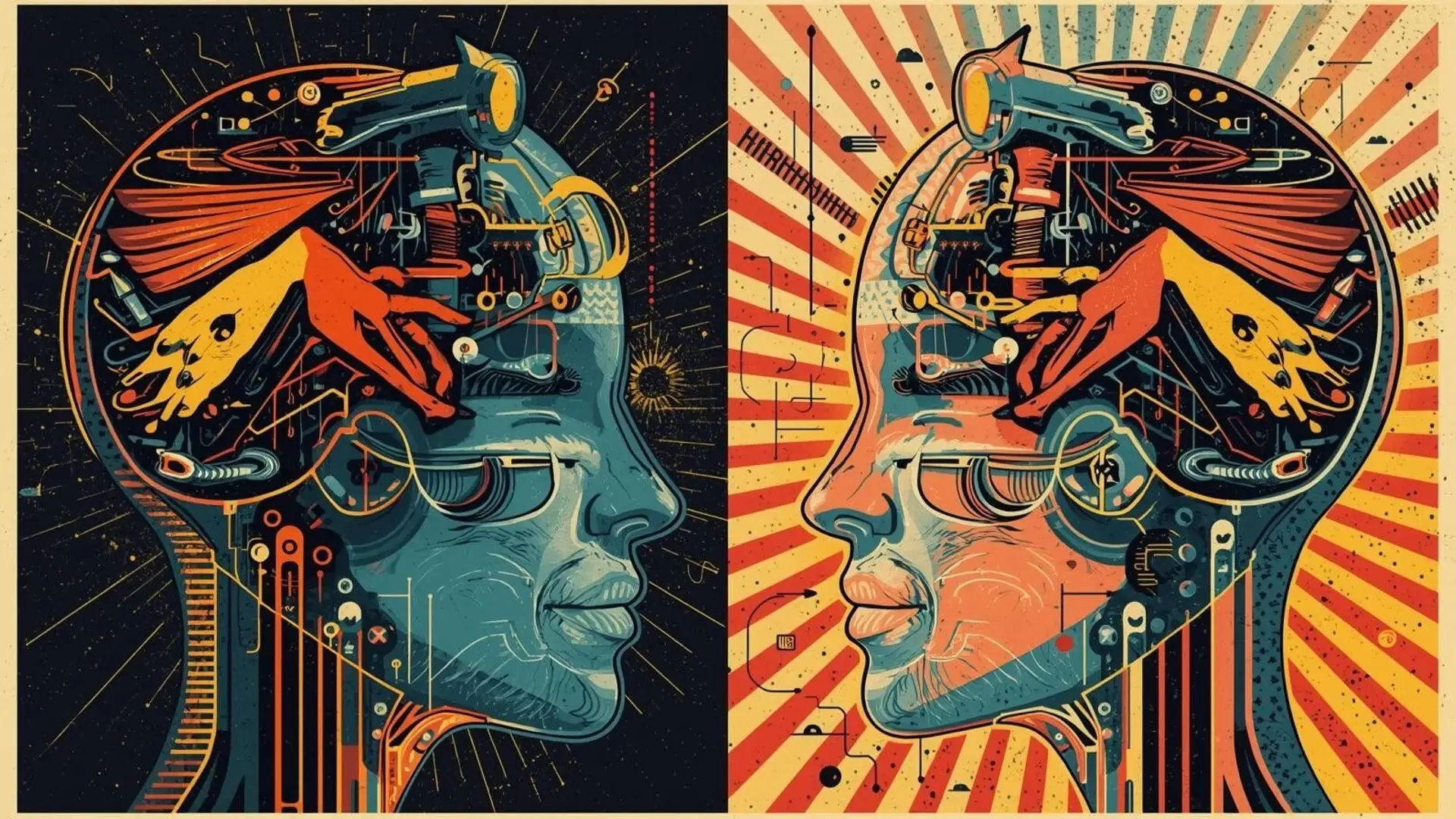
Learn how AI can misrepresent brands and discover strategies to correct hallucinations, manage bias, and safeguard your digital reputation with AI
To correct a brand hallucination in AI models, you must treat it as a symptom of corrupted training data rather than a one-off glitch: audit which high-authority sources feed the model's negative perception, repair those sources directly, and saturate the web with accurate, declarative content so the next training iteration tips in your favor. Unlike traditional search, a large language model's output is a probabilistic synthesis of billions of data points, so brand perception now lives in the latent space of neural networks rather than on the first page of Google.
Key Takeaways
- LLMs are probabilistic, not deterministic, so brands get mischaracterized by statistical frequency rather than fact.
- Hallucinations are symptoms of corrupted training clusters, not random glitches.
- The Data Provenance strategy targets the origin of bias, not just the AI's output.
- Semantic Narrative Repair combines source-first correction with high-authority content saturation.
- Cleaning your digital footprint today pre-bakes a better reputation into future model versions.
Last updated: June 6, 2026
In the previous era of digital marketing, a brand's reputation was largely defined by what appeared on the first page of Google search results. Today, that paradigm has shifted fundamentally. As generative AI models like GPT-4, Claude, and Gemini become the primary interfaces through which users discover information, the battle for brand perception has moved from the visible surface of the web into the latent space of neural networks. For Chief Marketing Officers and PR Directors, this presents a terrifying new challenge: the Public AI Reputation crisis.
Unlike traditional search results that you can influence through standard SEO or paid placements, an LLM's output is a probabilistic synthesis of billions of data points. When an AI hallucinates a corporate scandal that never happened or consistently associates your brand with outdated negative sentiment, it is not just a technical glitch. It is a fundamental corruption of your brand's digital history. This guide explores how to move beyond reactive damage control toward a proactive strategy of AI Narrative Intelligence.
Why Do AI Models Say Incorrect Things About My Brand?
To fix a negative AI narrative, one must first understand why it exists. Large language models (LLMs) are probabilistic, not deterministic. They prioritize the most likely next word based on their training data rather than factual accuracy. A 2025 Nature paper reframed this bluntly: hallucinations persist because evaluation metrics reward confident guessing over admitting uncertainty, so a model that fabricates an answer often scores higher than one that abstains [1]. This creates a sentiment risk where a brand can be unfairly characterized because of the statistical frequency of negative terms in its training corpus.
Hallucination is not a fringe edge case. A peer-reviewed 2025 survey found that even advanced models like GPT-4 produce inaccurate factual statements in roughly 5–10% of general-knowledge responses, with rates climbing into the tens of percent on harder, domain-specific tasks [2]. A separate Stanford study of legal queries found LLMs invented non-existent court cases and hallucinated at least 75% of the time about specific rulings [3] — a stark illustration of how confidently wrong these systems can be about verifiable facts.
For example, if a company faced a minor product recall five years ago that generated a high volume of sensationalist news cycles, an AI might weight those events more heavily than the subsequent five years of positive growth. A common failure mode researchers call competitor bleed assigns attributes of a better-known rival to your brand because the model associates those features with the category rather than the specific company [4]. For a brand manager, seeing an AI confidently state that your product is incompatible with a major standard (when it is, in fact, the industry leader) is the modern equivalent of a front-page smear campaign, but one that is dynamically generated for every single user.
The legal stakes are now real
This is no longer a reputational abstraction. In Moffatt v. Air Canada (2024 BCCRT 149), British Columbia's Civil Resolution Tribunal held Air Canada liable when its chatbot invented a bereavement-fare refund policy that did not exist. The airline argued the chatbot was "a separate legal entity responsible for its own actions"; Tribunal Member Christopher Rivers called that "a remarkable submission" and ruled the company responsible for everything its systems say, awarding the customer damages [5]. The precedent is clear: a brand owns the words its AI surfaces.
What Is the Data Provenance Strategy?
The prevailing wisdom in enterprise AI often focuses on Retrieval-Augmented Generation (RAG) to ensure internal bots stay on track. However, this does nothing for the public models that the rest of the world uses. The Data Provenance strategy shifts the focus from the output to the origin. Instead of viewing hallucinations as random errors, reputation managers must treat them as symptoms of corrupted training clusters.
Most LLMs are trained on a mixture of massive internet scrapes — no single corpus. GPT-3, for instance, blended Common Crawl, WebText2, two book corpora, and Wikipedia; LLaMA drew on Common Crawl, C4, GitHub, Wikipedia, books, ArXiv, and StackExchange [6]. Common Crawl alone publishes roughly 20TB of scraped text every month and has become the backbone of pre-training for GPT, Gemini, and Claude-class models — both Anthropic and OpenAI have financially backed the nonprofit that runs it [6]. Wikipedia is included specifically because it is relatively clean and is treated as a quick injection of factual ground truth.
If a negative narrative is persistent in AI outputs, it is likely because the model has identified a high-authority source that contains that bias. To correct the narrative, you must perform a forensic audit of the web to identify which specific high-authority datasets are feeding the model's negative perception. This is not about deleting bad reviews. It is about identifying the semantic clusters (specific articles, forum threads, or outdated white papers) that the AI uses as ground truth for your brand's identity. Notably, research suggests LLMs lean on Reddit and editorial content for a large share of brand information rather than corporate websites [4] — so a monitoring strategy that only watches official channels misses the sources that actually shape AI perception.
How Do I Repair a Damaged AI Narrative?
Once the problematic sources are identified, the next step is Semantic Narrative Repair. This is a multi-channel correction protocol designed to influence the model's next training iteration or fine-tuning weight. It begins with Source-First correction: reaching out to editors of high-authority news sites to update outdated articles or correcting factual errors on Wikipedia.
However, because LLMs also rely on the vibe of the internet, you must also engage in semantic saturation. This involves deploying a high volume of factual, high-authority content that uses the specific keywords and sentiment markers you want the AI to associate with your brand. Platforms such as NetRanks address this by providing the visibility needed to track how these narrative shifts are progressing across different generative engines. By monitoring the Share of Model and the sentiment of AI-generated summaries, PR professionals can see in real-time if their correction campaigns are successfully altering the latent weights of the models.
In our work at NetRanks, we monitor how a brand's narrative and sentiment shift across different generative engines so correction campaigns can be tracked rather than guessed. Ready to see how your brand is being described? Explore NetRanks.
Repair levers at a glance
| Lever | What it targets | Time horizon |
|---|---|---|
| Source-first correction | Outdated/inaccurate high-authority articles, Wikipedia entries | Immediate to weeks |
| Semantic saturation | The aggregate "vibe" across forums, editorial, and reviews | Weeks to months |
| Structured declarative content | Entity-relationship clarity for retrieval and next-epoch training | Months to next model version |
| Continuous monitoring | Detecting whether the narrative is actually shifting | Ongoing |
Retrieval-grounded answers behave differently from open generation: when a model is forced into summary mode over a trusted document rather than free recall, hallucination drops sharply [2]. That is why declarative, well-structured public content matters — it gives retrieval systems clean ground truth to cite.
What Is the Chain of Corrections Protocol?
Managing an AI reputation requires a systematic approach that differs from traditional PR. We recommend a Chain of Corrections protocol:
- Audit: Use generative engine optimization (GEO) tools to query various models with diverse prompts to find where the brand identity is fractured.
- Extraction: Determine the probable sources of these inaccuracies by looking for specific phrasing that mirrors existing web content.
- Update: Directly engage with the data provenance points identified, such as news archives or industry databases.
- Reinforcement: Publish white papers, case studies, and press releases that use AI-friendly structures with clear, declarative sentences with strong entity-relationship links.
As Forbes points out, brand safety now requires moving beyond keyword blocking to understanding narrative intelligence. This protocol ensures that your brand is not just defending its past, but actively shaping the data that will define its future in the AI era.
Does Correcting Data Help if Models Are Frozen at a Knowledge Cutoff?
It is important to acknowledge that AI models are often frozen after their initial training, with knowledge cutoffs that can be months or years old. This leads many brand managers to feel helpless. However, the largest AI providers are constantly fine-tuning their models and preparing for the next massive training epoch. By cleaning up your digital footprint today, you are essentially pre-baking a better reputation into the next version of GPT or Claude.
MIT Sloan Management Review emphasizes the unpredictable nature of how these models interpret identity, which makes clean data more valuable than ever. High-authority backlinking and semantic clustering are no longer just for SEO. They are the architectural blueprints for your brand's existence within a neural network. If you can ensure that the highest-authority nodes in the global data graph represent your brand accurately, the AI's probabilistic engine will eventually tip in your favor.
Securing Brand Sovereignty in the AI Era
The rise of generative AI has effectively ended the era where a brand could control its message through centralized PR. We now live in an era of decentralized, algorithmic perception. To maintain brand sovereignty, leaders must adopt the tools of AI Narrative Intelligence and the Data Provenance strategy. This means moving away from vanity metrics and toward a deep understanding of how their brand exists as a mathematical vector within an LLM.
By identifying the specific sources of bias and executing a rigorous protocol of semantic repair, enterprises can correct hallucinations and ensure their public AI reputation reflects their true values and achievements. The risk of inaction is high. Allowing a corrupted digital history to go unchecked is an invitation for AI to define your brand in ways you never intended. In the age of intelligence, the most important asset a brand owns is no longer its logo, but the data that describes it.
Frequently Asked Questions
Why do AI models say incorrect things about my brand?
Large language models are probabilistic, not deterministic. They predict the most likely next word from their training data rather than verifying facts, so a brand can be mischaracterized when negative or outdated terms appear frequently in the training corpus.
Can I actually correct an AI hallucination about my company?
Yes, but not through traditional SEO alone. Correction means identifying the high-authority sources feeding the model's perception, updating or correcting those sources, and saturating the web with accurate, declarative content the next training iteration will absorb.
What is the Data Provenance strategy?
It shifts focus from the AI's output to its origin. Instead of treating hallucinations as random errors, you treat them as symptoms of corrupted training clusters and audit which specific sources feed the model's view of your brand.
Does fixing my data help if AI models are frozen at a knowledge cutoff?
Yes. Major providers continuously fine-tune and prepare new training epochs. Cleaning your digital footprint today effectively pre-bakes a more accurate reputation into future model versions.
Where do AI models actually pull brand information from?
From a mixture of sources. Pre-training corpora are dominated by web crawls such as Common Crawl, supplemented by Wikipedia, books, and code. At answer time, retrieval-augmented systems also cite live sources, and research indicates Reddit and editorial content account for a large share of brand mentions, not just corporate sites. Effective narrative repair therefore works both layers: the training corpus and the live retrieval surface.
Can a brand be held legally responsible for what an AI says about it?
Increasingly, yes. In Moffatt v. Air Canada (2024), a Canadian tribunal held the airline liable for a refund policy its chatbot invented, rejecting the argument that the bot was a separate legal entity. Courts are allocating the risk of AI errors to the businesses deploying the technology.
Questions about your AI visibility? Contact us for a walkthrough. To start monitoring and repairing how AI describes your brand, get started with NetRanks.
Sources
- Nature: Evaluating large language models for accuracy incentivizes hallucinations — https://www.nature.com/articles/s41586-026-10549-w
- Frontiers in Artificial Intelligence: Survey and analysis of hallucinations in large language models — https://www.frontiersin.org/journals/artificial-intelligence/articles/10.3389/frai.2025.1622292/full
- Search Engine Land: How to identify and fix AI hallucinations about your brand — https://searchengineland.com/guide/fix-your-brands-ai-hallucinations
- ResoLLM: Why Large Language Models Hallucinate Brands — https://resollm.ai/blog/llm-brand-hallucination-causes/
- Pinsent Masons: Air Canada chatbot case highlights AI liability risks — https://www.pinsentmasons.com/out-law/news/air-canada-chatbot-case-highlights-ai-liability-risks
- Wikipedia: Common Crawl — https://en.wikipedia.org/wiki/Common_Crawl