AI Visibility · Brand Management · GEO
Your Website vs The Web: Where Does AI Pull Brand Mentions From?
 Hayalsu Altinordu
Discover where AI pull brand mentions from.
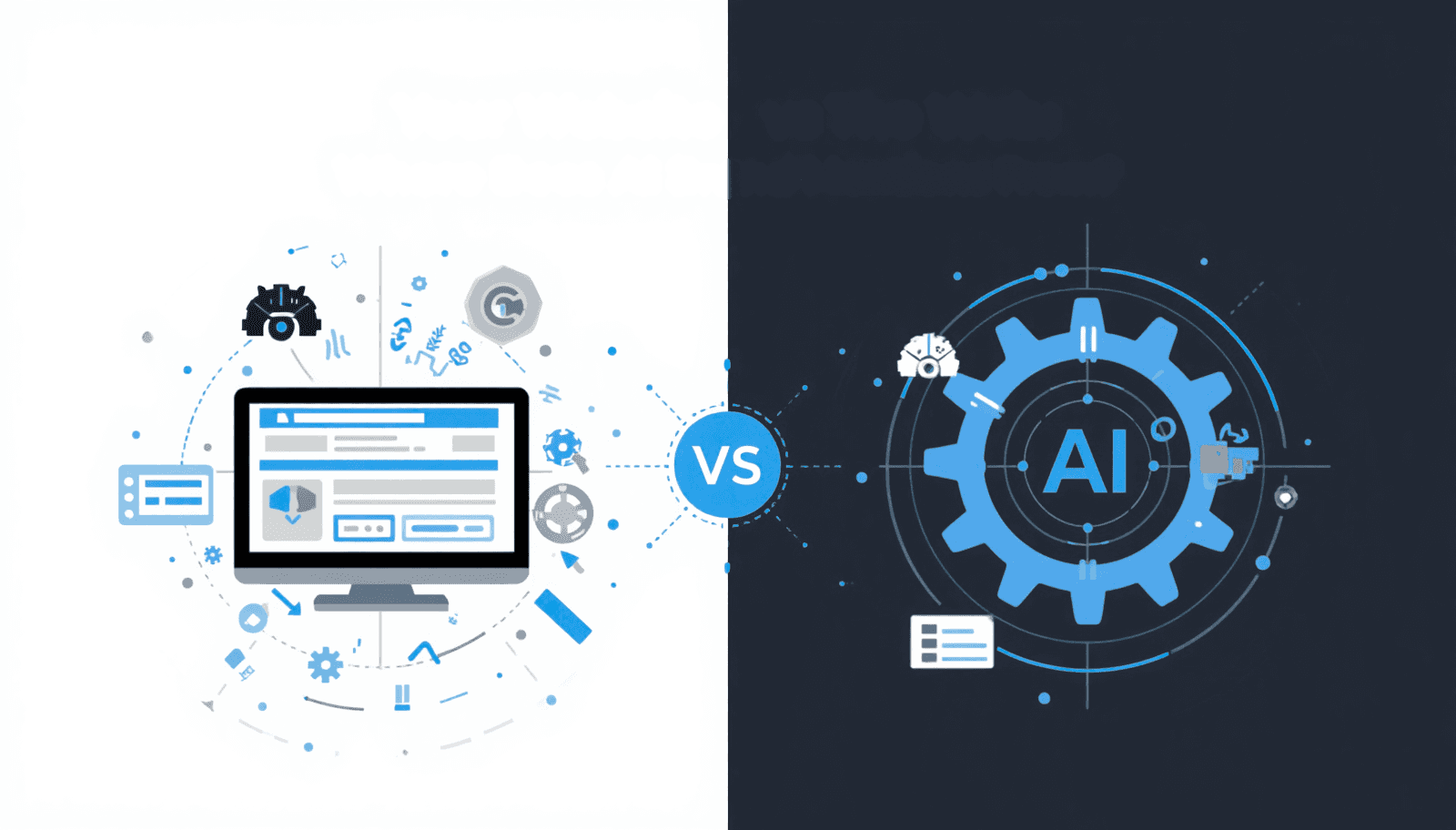
AI models pull brand mentions from across the entire web — high-authority media, external platforms, community discussions, and technical documentation — not just your website, so your brand narrative is no longer fully under your control. Large Language Models like ChatGPT, Perplexity, and Claude synthesize information from many sources, making your website one signal among many.
Key Takeaways
- AI synthesizes brand answers from across the web, not just your website.
- High-authority media often carries more weight than your own site.
- External platforms, communities, and technical docs all shape AI visibility.
- Inconsistent mentions let AI fill gaps and misrepresent your brand.
- AI reconstructs your brand; it does not just reflect it.
- Winning requires consistent messaging and monitoring across channels.
- A Semrush study of ~150,000 AI citations found Reddit (~40%), Wikipedia (~26%), and YouTube (~24%) dominate cited sources.
Last updated: June 6, 2026
How Does AI Search Change the Old Model?
Traditional SEO followed a clear model: optimize your website, rank on search engines, drive traffic. AI search changes that entirely. Instead of ranking pages, AI systems:
- Aggregate information.
- Cross-reference multiple sources.
- Select what appears most credible.
- Generate a unified answer.
Your website becomes one signal among many, and the real question is whether your website is shaping your brand story or the web is doing it for you.
Where Does AI Pull Brand Mentions From?
AI models rely on a distributed content ecosystem. We can be specific about the mix: a Semrush study of roughly 150,000 citations across ChatGPT, Perplexity, Gemini, and Google AI Overviews found Reddit appeared in about 40% of cited sources, Wikipedia in about 26%, and YouTube in about 24%, with no other single domain cracking 5% [1]. Community and reference content, in other words, outweighs polished brand pages. The mix also differs sharply by engine — ChatGPT leans on Wikipedia, Reddit, and major news; Google's AI surfaces LinkedIn, Medium, Quora, and Reddit; Perplexity favors review and research sites like G2, Gartner, NerdWallet, and PCMag [1]. These are the key source types shaping your visibility:
| Source type | Examples | Why it matters |
|---|---|---|
| High-authority media | News articles, industry publications, guest contributions | Perceived as objective, highly influential in AI answers |
| External platforms | Product directories, review platforms, SaaS marketplaces, app stores | Consistency strengthens credibility and categorization |
| Community discussions | Forums, Reddit, Q&A platforms, social media | Reflect real-world perception, not brand-controlled messaging |
| Technical documentation | API docs, help centers, knowledge bases, developer guides | Structured, factual content is valuable for AI answers |
For SaaS and technology companies, technical documentation is often underutilized. Want to know which sources drive your AI visibility? Check with NetRanks.
Does Your Website Still Matter?
Your website remains important, but it does not operate in isolation. It provides your core narrative, product positioning, and foundational content. However, if your messaging is not reinforced across the broader web, AI systems may deprioritize it.
When your brand appears inconsistently across sources, AI fills in the gaps. The mechanism is entity confidence: models build a brand's identity from repeated, consistent signals, so a brand with fragmented or contradictory signals gets filtered out in favor of higher-confidence entities [2]. The scale of inconsistency is documented — BrightLocal found only 68% of business contact information surfaced by ChatGPT and Perplexity matched the details on Google Business Profiles [3]. Inconsistency can result in:
- Misrepresentation of your product.
- Competitors appearing alongside your brand.
- Incorrect positioning or categorization.
- Loss of commercial intent.
AI does not just reflect your brand; it reconstructs it. And the evidence says off-site signals carry the weight: Ahrefs research across 75,000 brands found brand web mentions correlate roughly 3x more strongly with AI visibility than backlinks (0.66 vs 0.22) [4]. If your website communicates one message but the web signals another, AI will trust the broader web.
How Do You Win in AI Visibility?
Winning in AI visibility requires a shift from content creation to narrative engineering:
- Consistent messaging across sources.
- Strategic placement in high-authority content.
- Continuous monitoring of AI outputs.
- Ongoing optimization across multiple channels.
To influence how AI represents your brand, map where your brand appears across the web, identify inconsistencies and gaps, understand which sources influence AI responses, and optimize your presence beyond your website. This is not traditional SEO — it is AI Search Optimization. In our work at NetRanks, we help brands map where AI pulls their mentions from and close the gaps.
Frequently Asked Questions
Where do AI models pull brand mentions from?
AI models synthesize from across the web: high-authority media and blogs, external platforms like directories and review sites, community discussions on forums and Reddit, and technical documentation, not just your website.
Does my website still matter for AI visibility?
Yes, but it does not operate in isolation. It provides your core narrative and positioning, yet if your messaging isn't reinforced across the broader web, AI systems may deprioritize it.
What happens when brand mentions are inconsistent?
AI fills in the gaps, which can cause product misrepresentation, competitors appearing alongside you, incorrect positioning, and loss of commercial intent. AI reconstructs your brand rather than just reflecting it.
How do you influence how AI represents your brand?
Map where your brand appears, identify inconsistencies, understand which sources influence AI, and optimize your presence beyond your website. This is narrative engineering, not traditional content creation.
Which sources do AI models cite most?
A Semrush study of about 150,000 AI citations found Reddit (~40%), Wikipedia (~26%), and YouTube (~24%) dominate, with no other single domain above 5% [1]. The mix varies by engine, so the platforms where you build presence should match where each AI looks.
Conclusion
If you do not know where AI is pulling your brand mentions from, you are already behind. NetRanks helps you understand how your brand appears in AI-generated answers, identify which sources drive your visibility, benchmark against competitors, and connect visibility to real business impact.
Understand your position, control your narrative, and win in AI search. Get your free AI visibility snapshot.
Questions about your AI visibility? Contact us for a walkthrough.
Sources
- Semrush: The Most-Cited Domains in AI — A 3-Month Study — https://www.semrush.com/blog/most-cited-domains-ai/
- AuthorityTech: Why AI Search Gets Your Brand Wrong (entity confidence and corroboration) — https://authoritytech.io/blog/why-ai-search-gets-your-brand-wrong-how-to-fix-2026
- BrightLocal: Local Consumer Review Survey (68% contact-info match) — https://www.brightlocal.com/research/local-consumer-review-survey/
- The Digital Bloom: 2025 AI Visibility Report (Ahrefs brand-mentions vs backlinks correlation) — https://thedigitalbloom.com/learn/2025-ai-citation-llm-visibility-report/